This is default featured slide 1 title

Resources Your Way , From Anything To Everything

This is default featured slide 2 title

Resources Your Way, From Everything To Anything!

This is default featured slide 3 title

Resources Your Way, From Everything To Anything

This is default featured slide 4 title

Resources Your Way , From Anything To Everything

This is default featured slide 5 title

Resources Your Way , From Anything To Everything

Translate

Showing posts with label Engineering. Show all posts

Saturday, 13 April 2013

The Most Helpful Sites On Web

Ever in a situation where you just simply unable to find enough resources on a particular topic and you have to wander here and there looking for people to help? If so is the case then from next time you actually need not to suffer, because here is the list of top best helpful sites that provide immediate and sufficient resources to let you do what you want.
Moving on, the list in no particular  order contains extremely useful sites that you must look upon!


The resource bible features 14 different categories covering possibly each and every niche that one may need.Some of the sites may look familiar to you but still there are number of sites that you might not have heard.


The various categories include

  • Reference Sources
  • Note Taking
  • Online Office 
  • Encyclopedias
  • Collaboration tools
  • Instant Messaging
  • Tutorials
  • File Storage
  • Gaming
  • Cliff Notes
  • Social Networks
  • Blogging
  • Textbooks 
  • Jobseekings
Discover what you need and do share what you think of this site.

Now this is something which you call as Mother of Resources containing tons of not just resources but also almost infinite topics to learn upon. This definitely  cuts out one's vision of tunnel and provides a mind fullness of what one can learn, enhancing his career and thereby becoming an asset in any field


There is also a forum on site which can make you search for different things that you may not know!

Quora Actually is not a site that you should look upon resources, it's a question answer site that indirectly reveals the best of resources, advice and daily hacks that you should know.


The site has also many resources to learn upon but this is particularly for the people who are up in Learning to code, although the motto of Code.org is to promote programming in best ways it can and provide people interactive and useful ways as well as the necessity to learn programming.
The topics are:
  • Robotics
  • Computer Science
  • Android Application Development
  • IOS Application Development
  • Web Development and More


List is small but this is all i know at this time, I will update the list as soon as i get more of resources available 

Stay in touch, fell free to comment or ask something!
Keep Breathing :D
Jatin!


Friday, 12 April 2013

How to make Android apps in minutes and without coding!!

Can you imagine if you could make these Apps in hours?


No wonder everyone would be interested to make Android apps.But it is conventionally not that easy, indeed it is quite tough, as it requires one to be fully equipped with a code efficient  programming environment and a very good knowledge of JAVA.Even if you have all of these you can't even make these apps in minutes, reason is simple, you got to code in conventional method which may appear as a 'crap' to many ( although no offence :D)
So to make Android applications in minutes and without coding , follow these instructions :-


App Inventor is a online virtual interface that lets u make makes easily in a cozy manner and not only this it let you simulate the app u make, so you actually need not an android phone to make an app.
The book can be downloaded from here which has step by step tutorial and  collection of most frequent apps made by developers to learn App Development 


In case You are interested Do have a look at my not so interesting apps but still i'm happy as i made these apps in about 30-40 minutes  https://sites.google.com/site/jatindecodedbatra/

HappiLLICATION :D

dEVELOP,Simulate, BREATHE!


Thanks   for bearing me , suggestions,views and anything  (except spam) is always welcome in comments!!


Friday, 5 April 2013

Solve Programming Problems In Minutes With F# !!


Ever wondered how many programming languages we have got? And introducing one more language with all new syntax and learning it from scratch feels awkward.What if you could learn a language that is not only easy to learn but also industry deployed!! Think how much time you can save in making software,programs and applications.

The language is called  F#  "a strongly-typed, functional-first, open-source, cross-platform programming language for writing simple code to solve complex problems. From the business perspective, the primary role of F# is to reduce the time-to-deployment for analytical software components in the modern enterprise. Its interoperability with other languages and libraries and its ability to tackle the complexity of components such as calculation engines and data-rich analytical services offer a compelling story for businesses.
F# is both open-source under the OSI-approved Apache 2.0 license and a first-class language in Visual Studio. It is cross-platform and can be used on Mac OS X, Linux, Android, HTML5 and other platforms."

Why to use F#?

The Biggest Advantage of F# is that you can "solve computer problems in hours that can take even days and  weeks to solve a particular problem.
  • Simple code for complex problems
  • Rapid Prototyping
  • Fewer Bugs
  • Seamless Interoperability 
  • Efficient Execution 
  • Information-Rich Programming
With all above assets , it is indispensable to use F#, and become an industry oriented software Engineer!

How to Learn F#?

There is no dearth of learning resources available on web, but the point is are they good enough?
I'll make it easy and save your time to go and research over  F# learning resources.
The best and oldest form of learning is Books
But in case you don't like spending bucks on these books, you can go for tutorials available on net also

Stay Tuned
Happy Coding!!


Tuesday, 26 March 2013

8 New Electrical,Electronics,Communication,Control Engineering Online Courses

  • Introduction to Power Electronics

    About the Course


    The course is an introduction to switched-mode power converters. It provides a basic knowledge of circuitry for the control and conversion of electrical power with high efficiency. These converters can change and regulate the voltage, current, or power; dc-dc converters, ac-dc rectifiers, dc-ac inverters, and ac-ac cycloconverters are in common use. Applications include electronic power supplies, aerospace and vehicular power systems, and renewable energy systems.

Recommended Background

Knowledge of circuits and electronics at the level of an undergraduate major in electrical engineering is assumed.
Review-The course has not been started yet but from F.A.Q , it seems to have a potential thereby making it to top of list. 


ABOUT THIS COURSE


The course introduces engineering in the context of the lumped circuit abstraction. Topics covered include: resistive elements and networks; independent and dependent sources; switches and MOS transistors; digital abstraction; amplifiers; energy storage elements; dynamics of first- and second-order networks; design in the time and frequency domains; and analog and digital circuits and applications. Design and lab exercises are also significant components of the course.
The course is organized by weeks. To keep pace with the class, you are expected to complete all the work by the due dates indicated. Homeworks and labs must be completed by the Sunday of the week following the one in which they are posted. Weekly coursework includes interactive video sequences, readings from the textbook, homework, online laboratories, and optional tutorials. The course will also have a midterm exam and a final exam. Those who successfully earn enough points will receive an honor code certificate from MITx.

PREREQUISITES

In order to succeed in this course, you must have taken an AP level physics course in electricity and magnetism. You must know basic calculus and linear algebra and have some background in differential equations. Since more advanced mathematics will not show up until the second half of the course, the first half of the course will include an optional differential equations component for those who need it.

Course Review-This is only course which is most mature among all courses taught by The Great Anant Agrawal, From MIT, course covers from basic to higher topics of electrical engineering.Soft copy and both hard copy of certificates can be achieved for this course


  • Computer Architecture By Princeton University

About the Course


This course forms a strong foundation in the understanding and design of modern computing systems. Building on a computer organization base, this course explores techniques that go into designing a modern microprocessor. Fundamental understanding of computer architecture is key not only for students interested in hardware and processor design, but is a foundation for students interested in compilers, operating systems, and high performance programming. This course will explore how the computer architect can utilize the increasing number of transistors available to improve the performance of a processor. Focus will be given to architectures that can exploit different forms of parallelism, whether they be implicit or explicit. This course covers architectural techniques such as multi-issue superscalar processors, out-of-order processors, Very Long Instruction Word (VLIW) processors, advanced caching, and multiprocessor systems.

Recommended Background

This course is targeted at senior-level undergraduates and first-year graduate students. Students should have a good working understanding of digital logic, basic processor design and organization, pipelining, and simple cache design.
Review Of Course-Definitely the course is worth doing but it does not provide any certificate of accomplishments, Princeton University is one of most active University on Coursera providing the best user experience at no cost!


Don't judge the course by it's name, one is most likely to visualize circuits, resistors, thevnin, norton etc. Although it has these things in it but the best part of course is DIGITAL SIGNAL PROCESSING and INTRODUCTION TO MATLAB and OCTAVE.

About the Course


The course focuses on the creation, manipulation, transmission, and reception of information by electronic means. The topics covered include elementary signal theory; time- and frequency-domain analysis of signals; conversion of analog signals to a digital form; and how information can be represented with signals. Signal processing, both analog and digital, allow information to be extracted and manipulated. The course then turns to information theory, which demonstrates the technological advantages of digital transmission.

Recommended Background

Knowledge of Calculus

Review Of Course- Rice University may be not known to many, but the course has recorded a large number of enrolments, practical application techniques like MATLAB, OCTAVE and Digital Signal Processing is a charm of course. It is also a  signature track course thereby providing a means of proof for course completion, adding up to your resume

visit here

About the Course


This course investigates how to make mobile robots move in effective, safe, and predictable ways. The basic tool for achieving this is "control theory", which deals with the question of how dynamical systems, i.e., systems whose behaviors change over time, can be effectively influenced. In the course, these two domains - controls and robotics - will be interleaved and we will go from the basics of control theory, via robotic examples of increasing complexity - all the way to the research frontier. The course will focus on mobile robots as the target application and problems that will be covered include (1) how to make (teams of) wheeled ground robots avoid collisions while reaching target locations,  (2) how to make aerial, quadrotor robots follow paths in the presence of severe disturbances, and (3) how to locomotive bipedal, humanoid robots.

Recommended Background

Familiarity with basic calculus and linear algebra is required. Some exposure to differential equations is recommended.

About the Course


The goal of the course is to develop a complete working set of digital signal processing notions from the ground up. DSP is arguably at the heart of the “digital revolution” that, in the space of just a few decades, has enabled unprecedented levels of interpersonal communication and of information availability. 

In the class, starting from the basic definitions of a discrete-time signal, we will work our way through Fourier analysis, filter design, sampling, interpolation and quantization to build a DSP toolset complete enough to analyze a practical communication system in detail. Hands-on examples and demonstration will be routinely used to close the gap between theory and practice.

Recommended Background

Fundamentals of linear algebra and calculus are a must. Familiarity with probability theory and system theory are highly recommended. Familiarity with Matlab (or equivalent) and/or scientific programming are a plus.
Review-Essentially for people doing their majors/minors in electrical, electronics or control engineering.Starting from Scratch, course involves a lot of mental and analytical challenges.


About the Course


A modern VLSI chip is a remarkably complex beast:  billions of transistors, millions of logic gates deployed for computation and control, big blocks of memory, embedded blocks of pre-designed functions designed by third parties (called “intellectual property” or IP blocks).  How do people manage to design these complicated chips?  Answer:  a sequence of computer aided design (CAD) tools takes an abstract description of the chip, and refines it step-wise to a final design. This class focuses on the major design tools used in the creation of an Application Specific Integrated Circuit (ASIC) or System on Chip (SoC) design.  Our focus is on the key representations that make it possible to synthesize, and to verify, these designs, as they move from logic to layout.  

Our goal is for students to understand how the tools themselves work, at the level of their fundamental algorithms and data structures. You should be taking this course if (1) you are interested in building VLSI design tools;  (2) you are interested in designing VLSI chips, and you want to know why the tools do what they do;  (3) you just like cool algorithms, that work on big cool problems that involve bits, and gates, and geometry, and graphs, and matrices, and time.

Recommended Background

Programming experience (C++, Java) and basic knowledge of data structures and algorithms.  An understanding of basic digital design:  Boolean algebra, Kmaps, gates and flip flops, finite state machine design.  Linear algebra and calculus at the level of a junior or senior in engineering.  Exposure to basic VLSI at an undergraduate level is nice -- but it’s not necessary.  We will keep the course self-contained, but students with some VLSI will be able to skip some background material.

Review:The course gives a momentum for all those  thinking to go for Embedded/VLSI/Communication profile or for those people thinking to have research in Electrical Engineering And Computer Science


About the Course


The MOS transistor (MOSFET) is the workhorse of the microelectronic revolution. It is estimated that there are currently over 1 billion transistors per human being in the world. Part of the MOS transistor's success lies in its very small size (you can fit 1,000 of them within the width of a human hair!), part lies on some amazing things this device can do. However, the descriptions of MOS transistors in basic electronics courses cannot begin to do justice to this device. If you want to really know how the MOSFET operates, and how to model it, you need to study it carefully and systematically. This course will help you do just that.

The course starts with a review of basic physical principles, and expands into a detailed treatment of MOS transistor phenomena, in a logical and systematic fashion, enhanced by intuitive discussions. We discuss a hierarchy of models - from the simple to the sophisticated - clearly identifying the connections between them, and encompassing many aspects of modeling, including dc, large-signal transient operation, quasi-static operation, non-quasi-static operation, small-signal operation, noise, and structural effects. We discuss the concepts on which the most popular CAD (computer-aided design) MOS transistor models are based.

Recommended Background

This course assumes a background in basic calculus and in basic circuits and electronics. The course will include a quick refresher of basic semiconductor concepts (electrons and holes, intrinsic and extrinsic semiconductors, drift and diffusion, etc.).

Review-From Anything to Everything of MOS, course also has a handbook making the course more available offline too.

Thanks for reading! Comments and suggestions are always welcome!

Friday, 22 March 2013

30 Engineering Handbooks That An Engineer Must Have!


No matter what type of engineer you are, at point you may need a reference to review your concepts.As the saying goes, Books are best friends of not just humans but also of  ENGINEERS :D, having a handbook,rather keep it more profound, books are delectable to read and at times becomes our  lifelines.

Before your body temperature reaches to that of a kiln, let me introduce you with detailed explanation of each of books, Please keep scrolling if you don't find a book related to your niche, i have tried my best to cover almost every field of engineering  :D

  • Advanced Engineering Mathematics by Kreyszig

You can download the book for free here
(wait for five seconds and click on skip ad)


  • How to disappear completely and never be found


You can download the book  here
(wait for five seconds and click on skip ad)


  • Data Analysis: A Bayesian Tutorial


    You can download the book for free here
    No ads , Direct Download 


  • Mathematical Methods for Physics and Engineering: A Comprehensive Guide


You can download the book for free here
(wait for five seconds and click on skip ad)


  • AISC Steel Construction Manual


You can download the book for free here
(wait for five seconds and click on skip ad)


  • Building Code Requirements for Structural Concrete and Commentary


you can download the book for free here
(wait for five seconds and click on skip ad)


  • Shigley's Mechanical Engineering Drawing


you can download the book for free here
(wait for five seconds and click on skip ad)


  • Perry's Chemical Engineering Handbook


you can download the book for free here
(wait for five seconds and click on skip ad)


  • Marks' Standard Handbook for Mechanical Engineers


you can download the book for free here
(wait for five seconds and click on skip ad)


  • Roark's Formulas for Stress and Strain


you can download the book for free here
(wait for five seconds and click on skip ad)


  • Machinery's Handbook


you can download the book for free here
(wait for five seconds and click on skip ad)


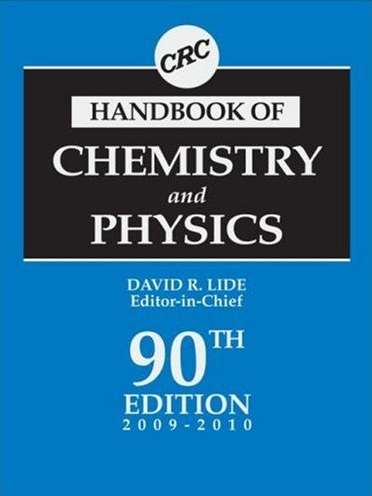
  • CRC Handbook Of Chemistry and Physics


you can download the book for free here
(wait for five seconds and click on skip ad)


  • The Electrical Engineering Handbook


you can download the book for free here
(wait for five seconds and click on skip ad)


  • For Computer Science People :TAOP

you can download the book for free here
(wait for five seconds and click on skip ad)


  • C Programming Language


    \

    you can download the book for free here

    (wait for five seconds and click on skip ad)


  • How Things Don't Work by Victor Papanek & James Hennessey


you can download the book  here
(wait for five seconds and click on skip ad)


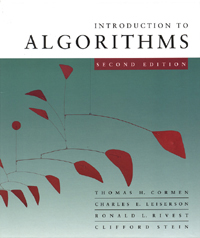
  • Introduction to Algorithms


you can download the book  here


  • Compilers: Principles, Techniques, and Tools


you can download the book  here
(wait for five seconds and click on skip ad)


  • Code Complete


you can download the book  here
(wait for five seconds and click on skip ad)


  • Machine Language Programming Cookbook


you can download the book  here
(wait for five seconds and click on skip ad)


  • Boston's Gear Handbook Of Catalog


you can download the book  here
(wait for five seconds and click on skip ad)


  • The Ashley Book of Knots


you can download the book  here
(wait for five seconds and click on skip ad)


  • An Army Field Engineers' Handbook


you can download the book  here
(wait for five seconds and click on skip ad)


  • The Whole Earth Catalog


you can download the book  here
(wait for five seconds and click on skip ad)


  • The Feynman Lecture On Physics 


you can download the book  here
(wait for five seconds and click on skip ad)


  • For Every Problem There Is A Solution That Is Simple Elegant And Wrong


you can download the book  here
(wait for five seconds and click on skip ad)


  • Electrical And Electronics Engineering Handbook


you can download the book  here
(wait for five seconds and click on skip ad)


  • Environmental Engineering Handbook

you can download the book  here
(wait for five seconds and click on skip ad)


  • Standard Handbook for Aeronautical and Astronautical Engineers


you can download the book  here
(wait for five seconds and click on skip ad)


The list is short, but definitely contains all the handbooks an engineer needs, Please let me know through your comments if i have missed anything.
List will be updated as soon as i explore new books!


Related Posts Plugin for WordPress, Blogger...